Best Pencils for Drawing and Sketching
The best pencils for drawing and sketching are not necessarily the most expensive or the softest. A useful drawing kit gives you control over value, line weight, texture, and detail. Beginners often benefit from a small range of graphite grades, while experienced artists may prefer carefully selected pencils for specific techniques such as cross-hatching, smooth shading, or architectural line work. The right choice also depends on whether you prefer traditional wood-cased pencils, refillable mechanical pencils, or a combination of both.
Graphite Grades for Drawing and Shading
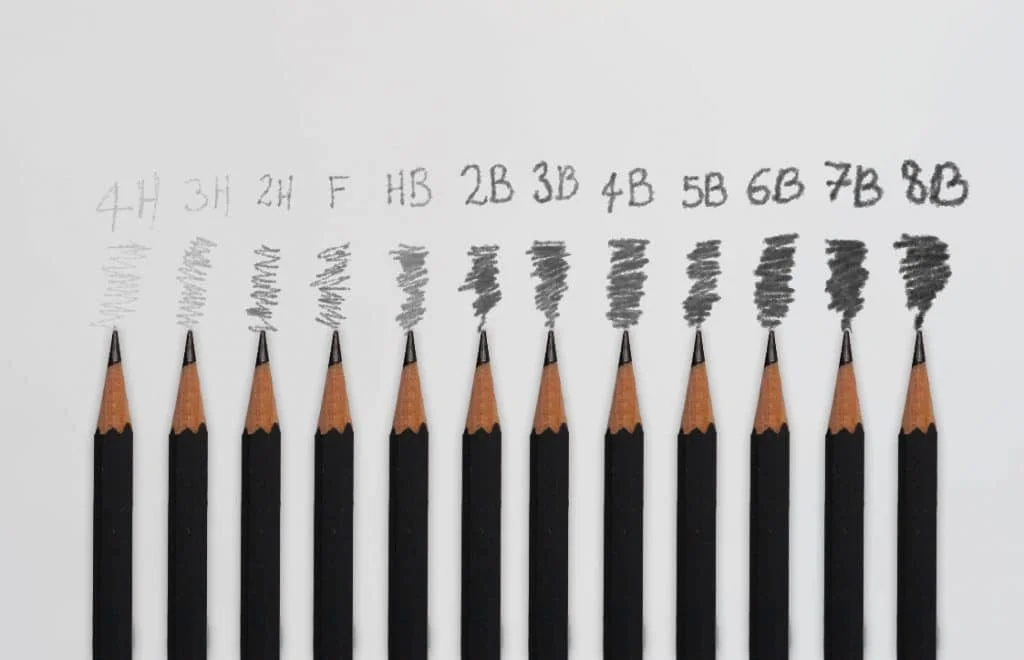
Graphite pencils are graded according to hardness and darkness. H pencils contain harder graphite and produce lighter, cleaner marks. B pencils are softer and darker, making them useful for shading and expressive lines. HB sits near the middle and is a practical everyday grade for planning, outlines, and general sketching. The exact appearance varies slightly between manufacturers, but the grading system is a reliable starting point.
A compact set might include 2H, HB, 2B, 4B, and 6B. Use 2H or H for construction lines that should remain unobtrusive, HB for contours and measured details, and 2B through 6B for gradually darker shadows. Very soft pencils such as 8B can create deep accents, but they may smudge easily and are less forgiving when you need crisp edges. Artists who draw portraits or still life often get more useful control from several middle grades than from one extremely dark pencil.
Pressure matters as much as grade. A light touch with a 4B can produce a softer midtone, while heavy pressure with an HB may create a surprisingly dark mark that is difficult to erase cleanly. Build values gradually with repeated layers instead of pressing hard at the beginning. This approach preserves the paper surface and makes corrections easier.
Best Pencils for Beginners and Advanced Artists
Beginners should look for consistent pencils with clearly labeled grades and a comfortable finish. A set of six to twelve pencils is usually enough to learn pressure control, hatching, blending, and value matching without creating unnecessary choice. A reliable HB, 2B, 4B, and 6B combination covers many classroom assignments and observational sketches. If the set includes a sharpener and eraser, check that those accessories are suitable for drawing rather than treating them as the main reason to buy it.
Faber-Castell is one familiar name in drawing supplies and offers pencil ranges across different levels of hardness and softness. When comparing any Faber-Castell set with another brand, focus on the actual grade range, the smoothness of the graphite, and how securely the core is bonded inside the wood. Brand reputation is useful, but the best set is the one whose marks and accessories match your working habits.
Advanced artists may prefer to assemble a custom selection. For example, a portrait artist could keep several hard grades for delicate facial construction, a group of B pencils for hair and fabric, and one very soft pencil for the darkest pupils or cast shadows. Landscape artists may value a firm pencil for rocks and architecture alongside a softer grade for foliage and atmospheric passages. A broad set is helpful, but a focused set often makes the process faster and more predictable.
Pencils for Detailed Lines and Blending
For detailed lines, choose a pencil that holds a fine point without feeling scratchy. H, F, and HB grades are useful for small features, technical sketches, lettering, and controlled cross-hatching. Sharpen the pencil frequently, because a rounded point changes line width and can make small areas look muddy. Use a light touch when outlining; dark outlines can flatten a drawing and make later shading less natural.
Soft B pencils are better for broad tonal areas, but smooth blending does not require rubbing every mark into a uniform gray. Layering parallel strokes, cross-hatching, and changing stroke direction can preserve form and surface character. A clean blending stump may soften transitions, although it can also spread graphite into highlights and reduce texture. Scrap paper under the drawing hand helps prevent unwanted smears, especially when working from the upper left or upper right across a page.
Paper selection changes the behavior of every pencil. Smooth paper supports precise lines and subtle gradients, while textured drawing paper catches graphite and creates a grainier appearance. Very smooth surfaces can be excellent for detailed studies but may show fingerprints and erase marks more readily. If you are learning to shade, medium-texture paper is often a versatile compromise because it accepts multiple layers without making every stroke look overly mechanical.
Wood-Cased vs Mechanical Drawing Pencils
My favourite pencils for sketching…
Wood-cased pencils are versatile because you can sharpen them to a long point, a blunt point, or an angled edge. A long point is useful for delicate lines and broad side shading, while a shorter point is sturdier for rough construction. Quality matters: poorly bonded cores may break inside the barrel during sharpening, and rough wood can make an otherwise good pencil unpleasant to use.
Mechanical pencils offer consistent diameter and fast access to a fine point. They are particularly useful for technical drawing, repeated patterns, measured studies, and small details. Lead sizes such as 0.9 can be more durable than very thin leads and are suitable for artists who apply moderate pressure or want a slightly broader mechanical line. Thinner options provide precision, but they require lighter handling and may be less suitable for vigorous sketching.
Mechanical pencils also make it easy to switch grades by changing the lead, although lead quality and compatibility matter. Keep separate refills for different hardnesses and label them clearly. A mechanical pencil will not automatically produce a better drawing than a wood-cased pencil; it simply offers a different balance of consistency, convenience, and point control. Many artists use a mechanical pencil for early detail and wood-cased pencils for expressive shading.
How to Choose a Drawing Pencil Set
Start by identifying the work you actually plan to do. For loose sketching, prioritize a comfortable HB through 4B range and a pencil that sharpens easily. For realistic shading, choose several closely spaced B grades so you can make gradual value changes. For technical or design work, include H and F grades, consider a mechanical option, and look for a sturdy case that keeps pencils organized.
Inspect the practical details before buying. The grade labels should be easy to read, the wood should sharpen without excessive splitting, and the graphite should make an even mark without frequent internal breaks. If a set includes an Electric Sharpener, treat it as a convenience rather than a guarantee of better results; some electric sharpeners remove more wood than necessary, while a manual sharpener can provide greater control. Test the sharpener on a spare pencil when possible.
Accessories can be useful, but they should not distract from the core pencil selection. Avery labels can help organize separate containers of graphite leads or identify custom grade mixes. Bazic may appear among budget stationery choices, and budget products can be perfectly suitable for practice, preliminary sketches, and classroom work when their grade markings and construction meet your needs. Compare the marks on paper rather than choosing solely by packaging.
Avoid sets that offer many nearly identical grades if you are still learning the fundamentals. A smaller, balanced selection encourages you to practice pressure control instead of searching for a pencil that solves every value problem. Also remember that colored drawing tools are a separate category: CRAYONS can be useful for bold, waxy studies and mixed-media experimentation, but they do not replace graphite pencils when you need subtle monochrome shading or fine tonal transitions.
The best pencils for drawing and sketching are the ones that support your technique without getting in the way. Begin with a dependable range such as HB, 2B, 4B, and 6B, then add harder grades, softer grades, or mechanical leads as your projects demand them. With suitable paper, regular sharpening, and gradual layering, even a modest pencil set can produce detailed, convincing drawings.