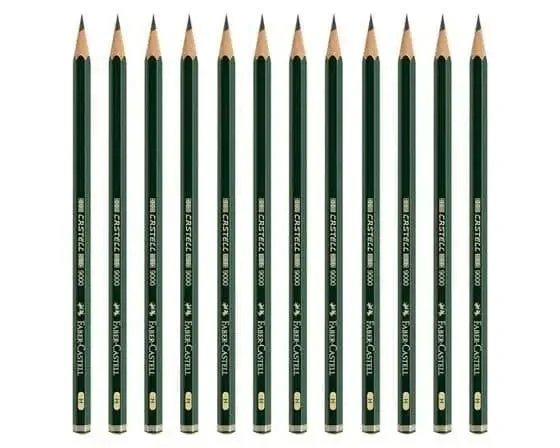
Choosing among pencils is easier when you know what matters beyond appearance. The right pencil depends on the marks you want to make, the paper you use, how often you sharpen, and whether you value convenience, precision, or durability. A soft graphite pencil can create rich shading but may smudge during note-taking, while a harder grade stays crisp for diagrams and technical work. This guide explains the main pencil grades, pencil types, lead sizes, and set features so you can buy with a clear purpose rather than simply choosing the largest assortment.
Understanding HB, H, and B Pencil Grades
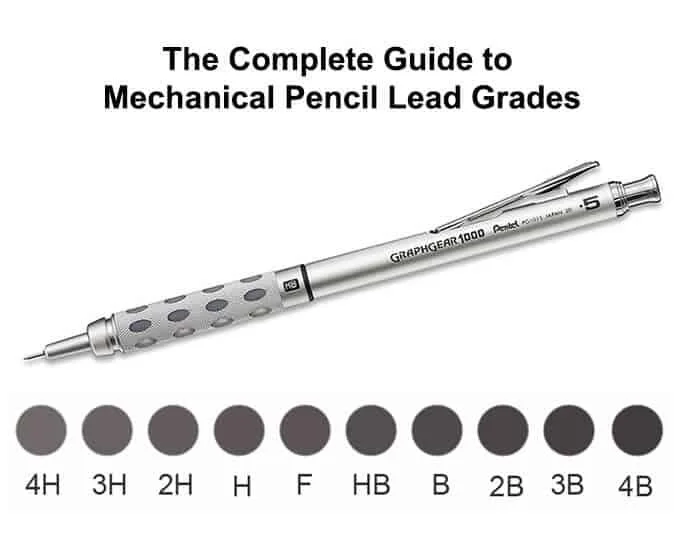
Pencil grades describe the relative hardness and darkness of graphite. H stands for hard, B stands for black, and HB sits near the middle. The grading scale is not perfectly identical across every manufacturer, but it provides a useful comparison. A 2H pencil is harder and lighter than an H, while a 2B is softer and darker than a B. As the number rises, the difference usually becomes more pronounced.
HB is the dependable all-purpose choice for schoolwork, forms, lists, and general writing. It gives a moderately dark line without wearing down too quickly, and it is usually easy to erase cleanly. If you are buying pencils for a classroom or shared household supply, HB is the safest starting point because it suits a wide range of everyday tasks.
H and harder grades, such as 2H, 4H, and 6H, are useful when accuracy matters more than boldness. They hold a fine point well and are common for drafting, construction lines, geometric exercises, and light underdrawing. Their main drawback is pressure: pressing too firmly can leave grooves in the paper that remain visible even after erasing.
B grades, including 2B, 4B, and 6B, produce progressively darker and softer marks. Artists use them for expressive lines, tonal studies, portraits, and broad shadows. Softer graphite blends easily, but it also transfers more readily to hands and facing pages. For drawing, a mixed set containing H, HB, 2B, 4B, and 6B is generally more useful than a pack containing several nearly identical middle grades.
Wood-Cased, Mechanical, and Clutch Pencils Compared
Wood-cased pencils remain popular because they are simple, comfortable, and versatile. Sharpening exposes fresh graphite and wood together, allowing you to choose a short point for durable writing or a long point for drawing. They are often the best value for children, classrooms, sketchbooks, and anyone who enjoys a traditional feel. The tradeoff is that they require a sharpener and gradually become too short to hold comfortably.
Mechanical pencils use replaceable graphite leads advanced through a button, side mechanism, or twist action. They maintain a consistent barrel length and are convenient for writing, mathematics, and detailed work. There is no wood shavings mess, and a built-in eraser may be useful for quick corrections. However, thin lead can break if you press hard, and the grip and mechanism quality vary considerably. A cheap mechanical pencil may feel less stable than a well-made wood-cased pencil.
Clutch pencils hold a thicker graphite stick with a gripping mechanism that opens when you press the end. They are especially useful for sketching, technical drawing, carpentry, and other work where a strong, broad lead is valuable. Because the lead is thicker, it is less vulnerable to snapping than standard mechanical lead. Some clutch pencils need a separate lead pointer, and replacement leads can cost more than ordinary pencil refills.
When comparing these formats, consider the working environment. A wood-cased pencil is easy to replace and requires little explanation. A mechanical pencil is efficient for repeated writing and precise lines. A clutch pencil is a specialist tool for users who want substantial graphite and flexible line width. None is universally best; the appropriate choice depends on how the pencil will be used.
Choosing Pencils for Writing, Drawing, and Technical Work
Pencil Grades for Drawing and Sketching (EASILY Explained!)
For writing, start with HB or a similar middle grade. Students who prefer darker notes may like B or 2B, provided the paper is smooth enough to prevent excessive smearing. If the pencil will be used for long study sessions, pay attention to the barrel shape and grip as much as the grade. A hexagonal barrel resists rolling off a desk, while a round or triangular barrel may feel more comfortable for some hands.
For drawing, range matters more than a single ideal grade. Hard pencils are useful for construction lines and delicate details; HB and B grades handle outlines; softer grades create shadows and deep accents. Smooth paper supports crisp lines, whereas textured paper catches more graphite and produces a grainier appearance. A drawing set should ideally include a spread of grades rather than only soft pencils, since a full tonal range is difficult to achieve with one hardness.
For technical work, choose a pencil that keeps its point and produces predictable marks. H grades are suitable for light layouts, while HB is practical for labels and general notation. Mechanical pencils can be particularly convenient for repeated measurements, lettering, and diagrams because their line width stays more consistent. A retractable tip is useful when carrying the pencil in a pocket or pencil case, and a secure clip helps prevent it from getting lost.
For children and beginners, prioritize durability, easy erasing, and a shape that encourages a relaxed grip. Brightly colored sets can make sorting and ownership easier, but color alone should not replace checking the graphite grade and eraser quality. Brands such as Fun Express may appear in school or craft assortments, while Koh-I-Noor is associated with a broad range of artist and technical drawing supplies. Pentel is well known for mechanical pencil formats and compatible lead systems. Compare the specifications rather than assuming every pencil from a brand serves the same purpose.
Lead Size, Durability, and Sharpening Needs
Lead diameter affects both line width and resistance to breakage. Common mechanical pencil sizes include 0.3 mm, 0.5 mm, and 0.7 mm. A 0.3 mm lead can produce very fine details but requires a light touch. A 0.5 mm lead is a versatile choice for writing and mathematics, while 0.7 mm offers greater strength for everyday note-taking. Thicker formats such as 0.9 mm and 1.3 mm are better suited to bold writing, sketching, and users who tend to press firmly. The 1.3 mm option is worth considering when standard mechanical lead breaks too often.
Recommended products
Use these catalog picks as a shortlist for pencil buying guide: grades, types, and uses explained. Compare measurements, materials, and return terms side by side instead of buying from a photo alone.


Wood-cased pencils need a sharpener matched to their shape and intended point. A standard single-hole sharpener is convenient for general writing, but an adjustable or long-point sharpener can be more useful for drawing. Replace or clean the blade when it begins tearing wood or producing an uneven point. For mechanical pencils, check that replacement lead matches both the diameter and the hardness required by the mechanism. A refill labeled HB is not interchangeable with every other size.
Eraser quality also affects the overall experience. A soft, clean eraser is preferable for light corrections, while a firmer eraser may remove darker graphite more aggressively but can roughen delicate paper. Integrated mechanical-pencil erasers are convenient, yet they are often small. If erasing is a major part of your work, plan to keep a separate block eraser nearby.
What to Look for in a Pencil Set
A useful pencil set should match a real task, not merely contain the highest number of pieces. For school and office use, look for several HB pencils, reliable erasers, and a case that keeps points protected. For art, prioritize a meaningful spread of grades and include a sharpener suited to the pencil diameter. For technical drawing, consistent grades, a dependable mechanical pencil, and spare leads may be more valuable than colored accessories.
Storage is easy to overlook. A compact case works well for a desk or backpack, while a pop up pouch can make it faster to see and reach several pencils at once. If a set includes colored pencils, check whether the advertised 8 color refill refers to eight replacement leads, eight pencil colors, or a refill pack with eight individual pieces. Product descriptions sometimes use similar wording for different contents, so verify the number of pencils, lead diameter, grade, sharpener, and eraser before buying.
When comparing the three catalog picks later in this guide, use a pros-and-cons approach rather than judging by piece count alone. One pick may offer the best range of graphite grades for drawing, another may provide more practical mechanical-pencil refills and a durable case, and a third may be the better value for classroom quantities. Check each option for lead sizes, included accessories, portability, replacement availability, and the kind of marks it is designed to make. The best choice is the one whose strengths match your work and whose limitations will not become daily inconveniences.
Finally, buy a small quantity first if you are uncertain about grade or format. Test the pencil on the paper you actually use, paying attention to darkness, smudging, comfort, point retention, and erasing. Once you know whether you prefer a firm H, balanced HB, soft B, fine 0.5 mm lead, or durable 1.3 mm lead, building a larger collection becomes much more straightforward.